
On 9 April, in front of the back-end big-data monitoring platform of Huantian Wisdom (Huantian Wisdom) in Shigao Subdistrict, a satellite technology team was using data returned by satellites of the Tianfu Constellation to monitor agriculture across the whole of Meishan Tianfu New Area. When abnormal crop growth was found, staff immediately contacted the person responsible for the plot — and the scene above took place.
“This is our Tianfu Granary digital platform, covering farmland protection, land management, planting monitoring and socialised services,” said Jiang Yuhan, the person in charge on site. The digital platform, built in 2023 on the Tianfu Constellation 01–10 satellites, now covers the whole new area. It has further raised the new area’s informatisation of agricultural emergency command and the standard of smart supervision, and empowers good farmland, good varieties, good machinery, good techniques, good farmers and good policy in Tianfu.
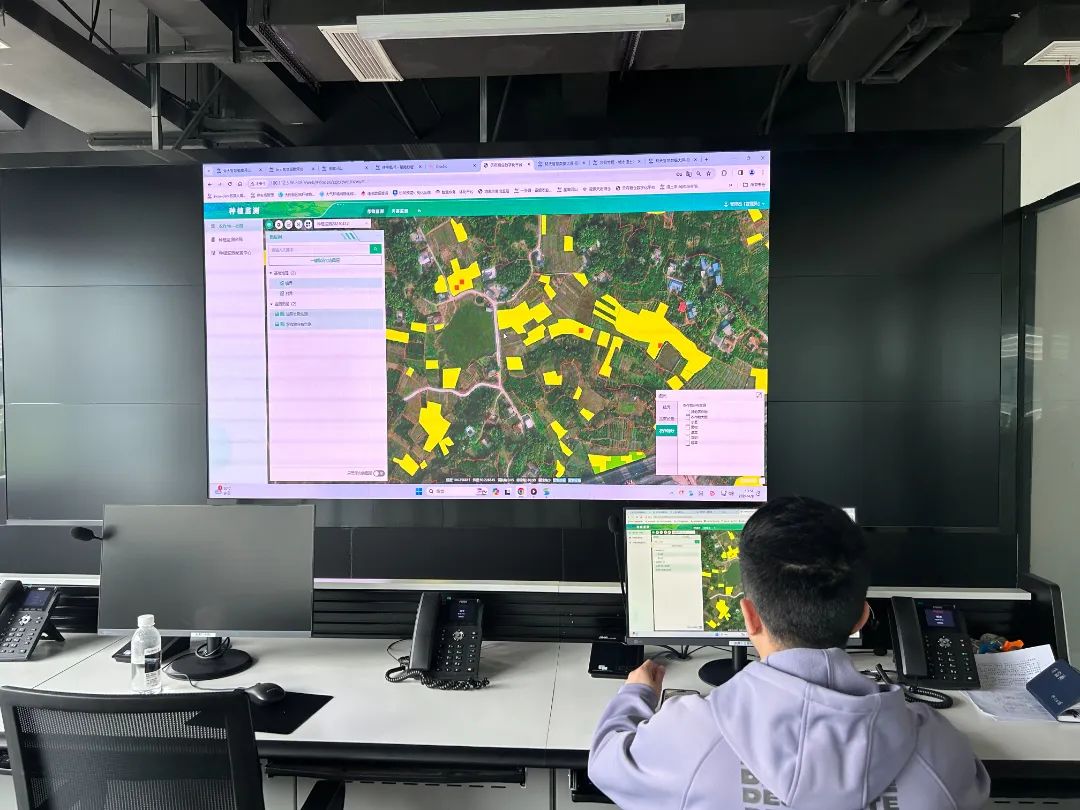
“This is the Longma Modern Agricultural Park. You can already see clearly the growth of wheat and oilseed rape.” As the mouse moved, the spring ploughing situation across the new area came into view. Jiang Yuhan explained that different crops present different colours, textures and other features in remote-sensing imagery. With satellite remote-sensing technology, crop types can be identified quickly and accurately, planted area and distribution extracted quickly, seedling condition, soil moisture and disaster conditions monitored and analysed, and yields estimated.
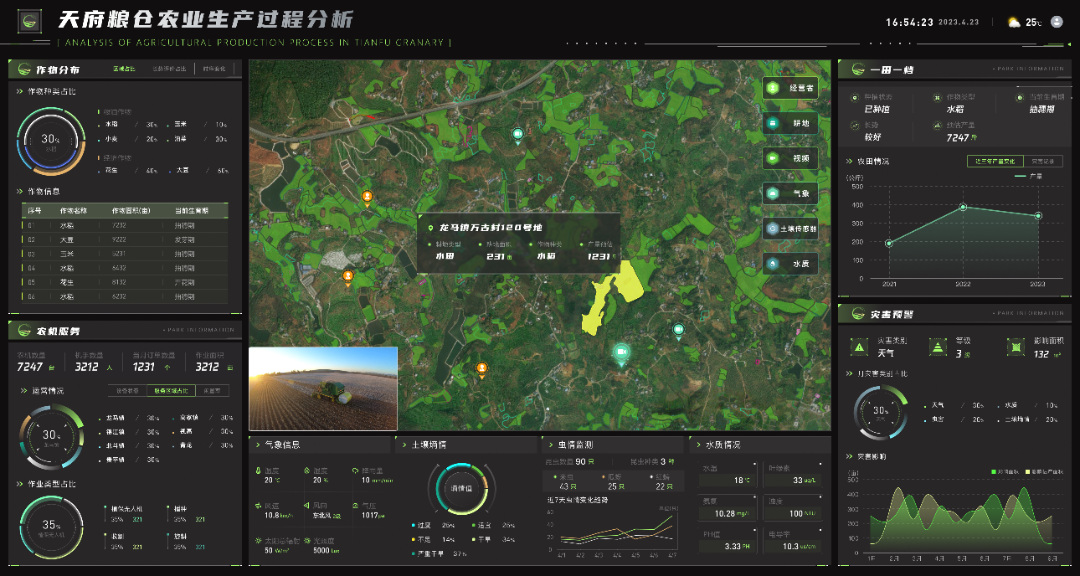
“In the past, to understand these conditions we could only rely on agricultural technicians to carry out sample monitoring in the fields. Now, we only need to process imagery from key periods captured by satellite, and to do some necessary field surveys, to understand accurately all aspects of agricultural production across the whole area, saving a great deal of labour, material and time.” A responsible person at the new area’s Rural Revitalisation Bureau said that this year the system was used for the first time in spring ploughing, and that, together with IoT devices such as farm-machinery positioning, high-definition video monitoring, weather stations, soil-moisture monitoring, pest monitoring and water-quality monitoring, it had been very effective for the monitoring and management of spring ploughing.
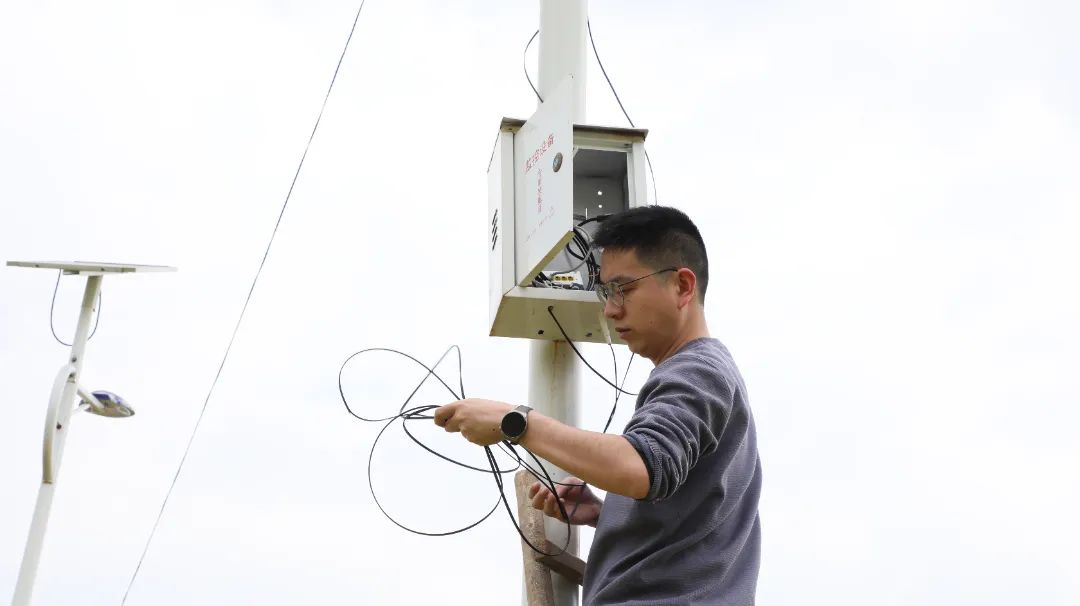
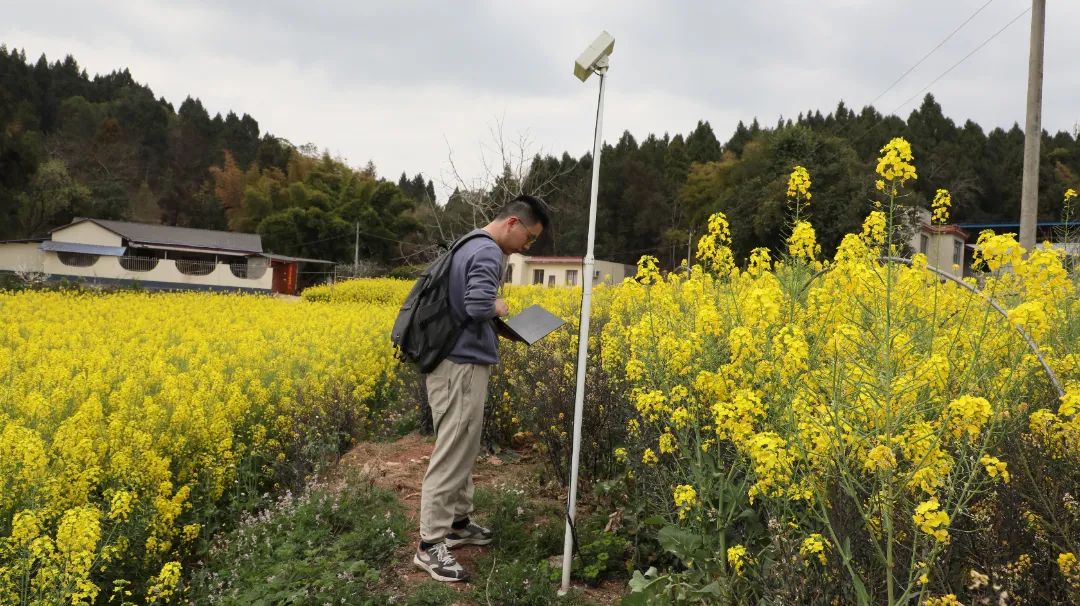
△ Huantian Wisdom operations staff conducting regular equipment checks in the fields
To help growers make good use of the smart monitoring data, the new area this year also launched the “Xinmei Nongfu” mini programme, which is convenient and quick to enter and includes sections on farm-machinery services, flexible labour, training registration and information services. Through the mini programme, growers can view weather conditions at a one-kilometre resolution and book technical services such as pruning, bagging, harvesting and water-and-fertiliser management, as well as mechanical services for tillage, planting, plant protection and harvest. So far, more than 20 service providers have been selected to join the mini programme. The organisations have published more than 200 service items through the online service hall, facing farmers directly and extending their service radius.
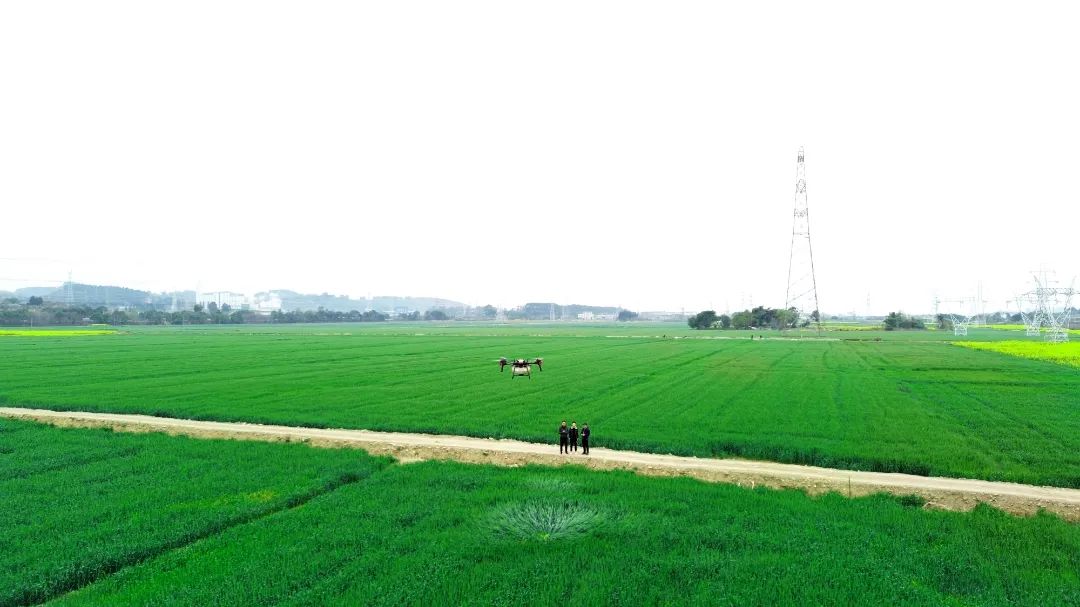
△ Qinglong Grain and Oil Modern Agricultural Park
“The function I have benefited from most in this mini programme is pest and disease identification,” grower Liu Jianjun told reporters. In recent weeks, the wheat and oilseed rape he plants have been in a critical growth period. To prevent pests and disease, he often uses the Xinmei Nongfu mini programme to scan crops with abnormal growth and obtain an effective diagnosis, so that treatment can be arranged in time.
“We are still improving it, and are actively exploring the translation of satellite remote-sensing data applications to empower smart agriculture, working on farmland protection, land management, planting monitoring and agricultural socialised services, raising the scientific and technological level of agriculture and safeguarding food security.” A responsible person at the new area’s Rural Revitalisation Bureau said that the new area would continue to advance digital-technology support for the building of the Tianfu Granary, raise digital expression, control and service capabilities across the board, and help build a higher-level Tianfu Granary.