
A couple of days ago, in the
Season 3 multimedia livestream “New Grain for the Tianfu Granary” launched by Sichuan Television,
Sichuan Television reporters went into Meishan Tianfu New Area,
to Huantian Wisdom and to Qingzhu Village in Guiping Town,
and shared with viewers
how the new area is using high technology to empower the building of the Tianfu Granary.
Millions of internet users watched the fine “harvest” scenes of the Tianfu Granary online.
Related topics on Weibo entered the national top ten trending list.
Huantian Wisdom has appeared on the programme for two consecutive years —
a second turn on the “harvest” topic list.
Meishan Tianfu New Area
, 33 likes
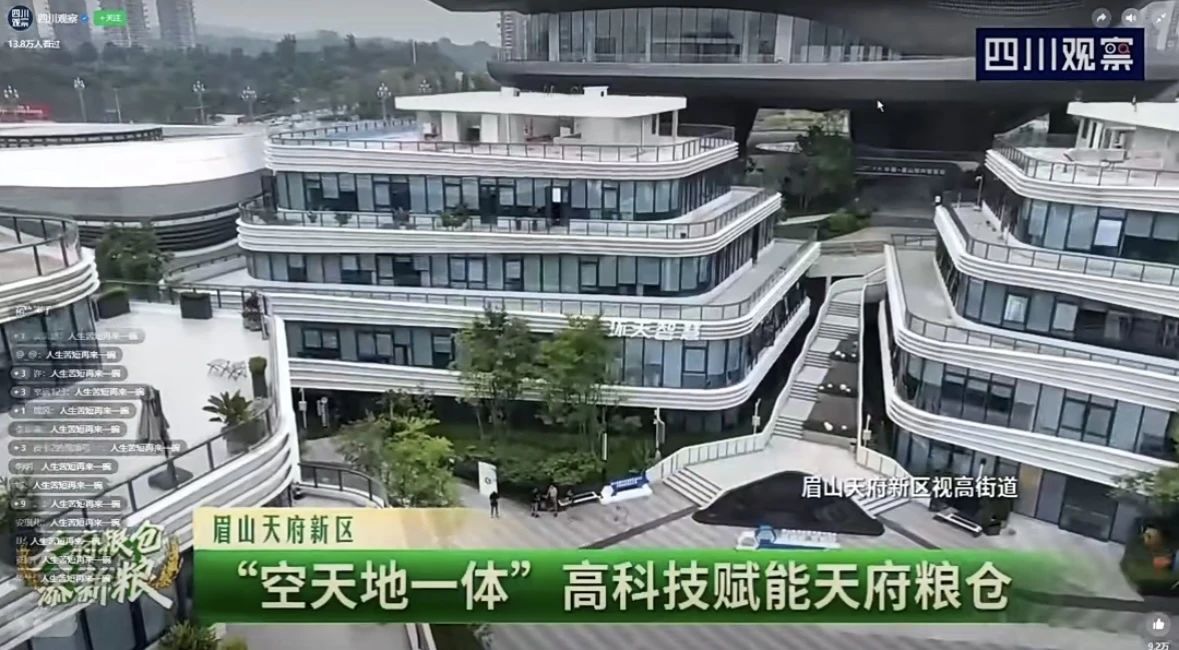
Sichuan Television reporter Han Shuo: This is Shigao Subdistrict in Meishan Tianfu New Area. In this building, a company has used satellite remote-sensing data to launch a series of new smart-agriculture products that help farmers manage their fields scientifically and achieve high quality and high yields. How exactly is satellite remote-sensing technology applied in actual agricultural production? Let’s find out.
Sichuan Television reporter Han Shuo: This is the operations and control hall of Huantian Wisdom. We’ve asked Director Kang to introduce it to us. Hello, Director Kang.
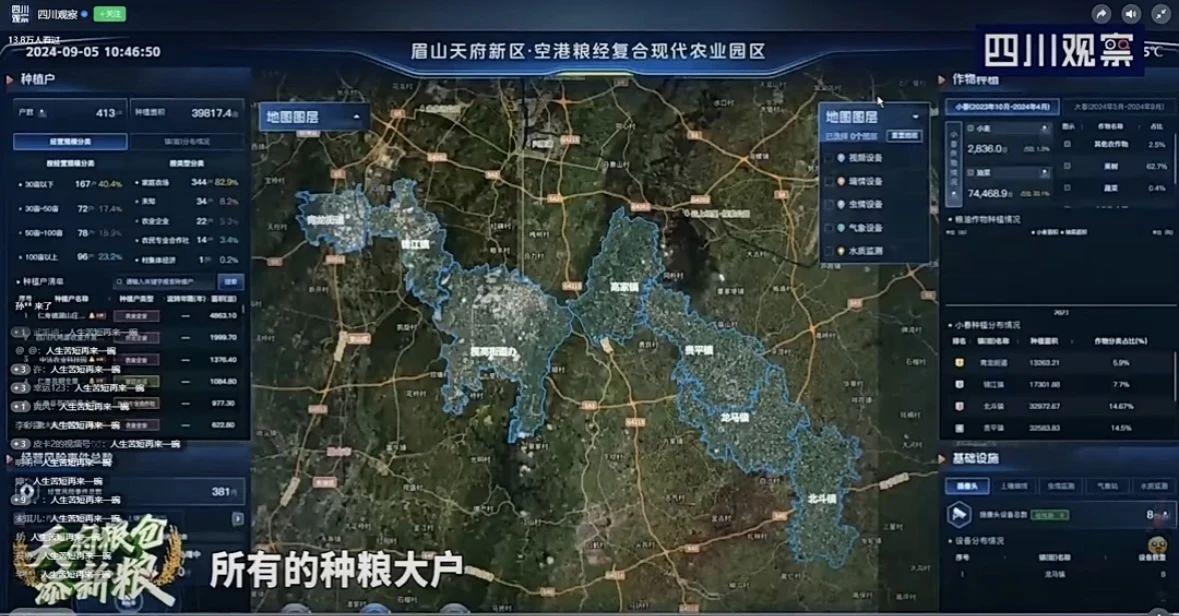
Kang Ruofan, product director at Huantian Wisdom: Hello, Mr Han. What you can see here is our overall satellite remote-sensing monitoring wall. All the large grain growers in Meishan Tianfu New Area have now been mapped. Here you can see all the farmland of one of those growers. We have completed the mapping of the farmland, and with that information we can combine satellite monitoring data from many dimensions to empower the grower with data. Let’s look at this grower’s overall growth this year. You can see that large areas are a very fine green, which means that overall growth this year has been very good.
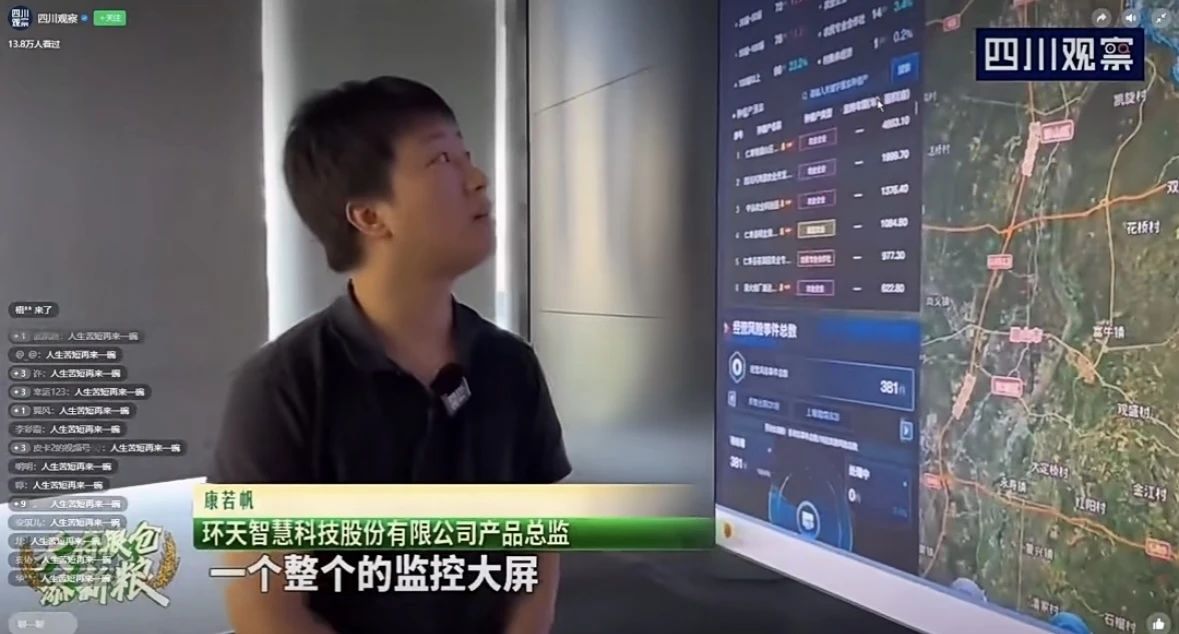
Sichuan Television reporter Han Shuo: Director Kang, I have a small question: how is this green produced?
Kang Ruofan, product director at Huantian Wisdom: It’s like this. In satellite imaging there is a good deal of light that the human eye cannot see, and when that light falls on different green plants, the reflected spectra are different. The green you see is the result after we process the data. Green means the crop is growing well; red means it is growing poorly.
Sichuan Television reporter Han Shuo: Director Kang, what do we do if we see red, meaning the crop is not growing well?
Kang Ruofan, product director at Huantian Wisdom: This year we are also using unmanned aircraft together with satellites to build a full space–air–ground monitoring and sensing system. I can show you a result image from unmanned-aircraft monitoring. This is the overall condition of this year’s rice. You can see that the rice here is already close to maturity and heading towards harvest.
Sichuan Television reporter Han Shuo: Yes, the rice, and the trees here, are very clear. We can see it clearly here, Director Kang, but how do the growers see it?
Kang Ruofan, product director at Huantian Wisdom: We also have a mini programme called Xinmei Nongfu. You can simply open WeChat on your phone, search for it and see the whole of Xinmei Nongfu. We use this mini programme to push all the data to farmers.
Sichuan Television reporter Han Shuo: The field whose monitoring data we see on the phone mini programme is a demonstration field in Qingzhu Village, Guiping Town. From these data, farmers can reduce the number of times they flood the paddy and can judge the maturity of the rice more accurately. Besides the help of the smart platform, what else can help farmers achieve high quality and high yields? We’ve invited Wang Liangjun, a senior agronomist at the Agriculture and Rural Affairs Bureau of Meishan Tianfu New Area, to explain.
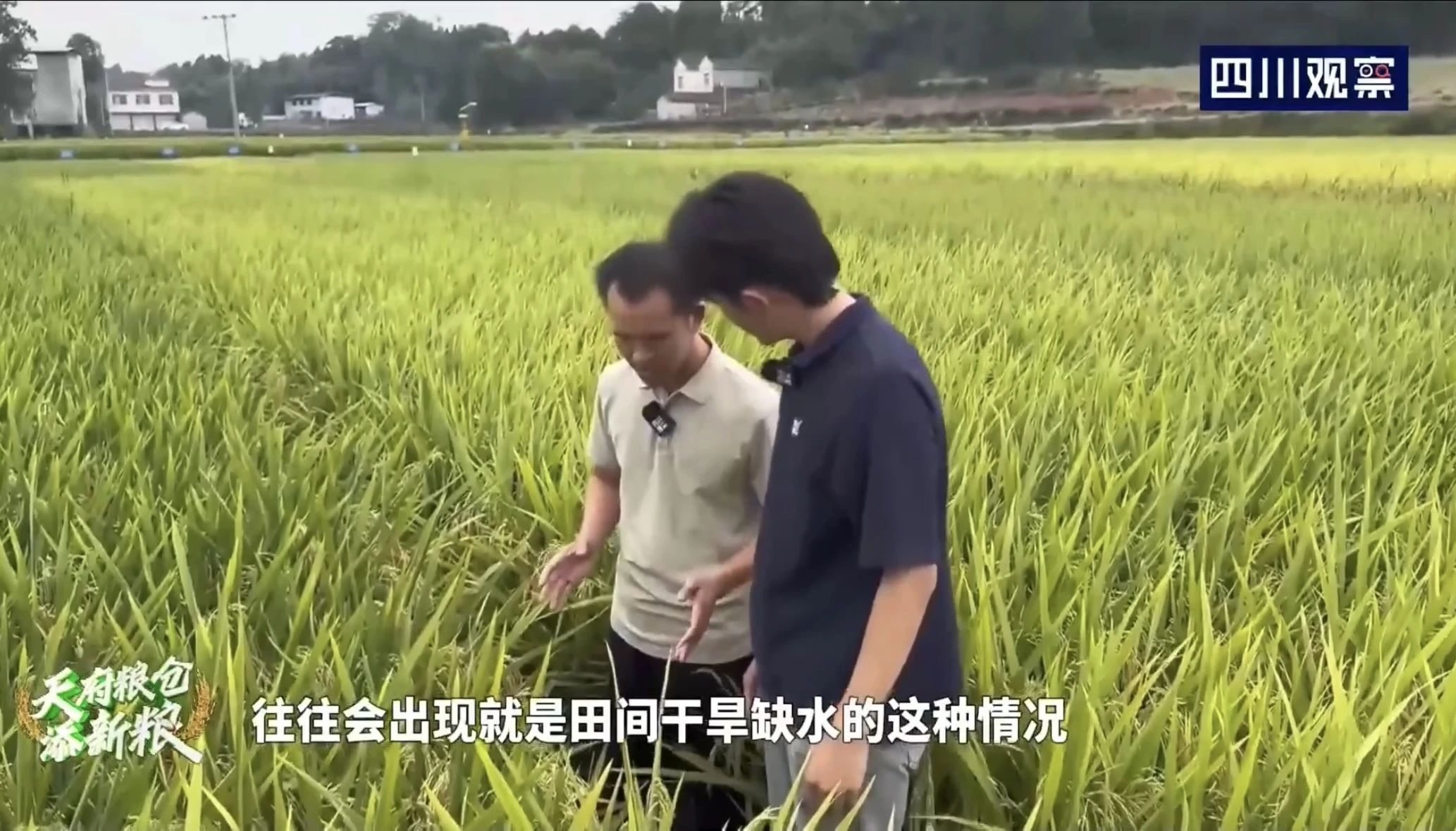
Wang Liangjun, senior agronomist at the Agriculture and Rural Affairs Bureau of Meishan Tianfu New Area: As you can see, large parts of Meishan Tianfu New Area are hilly. In light of the characteristics of agricultural production in these hills, this year we introduced 31 high-quality rice varieties for trial planting. These varieties have now entered the ripening stage one after another. But in hillside paddy, when rice enters the grain-filling and ripening period, the fields often become dry and short of water. This field, as you can see, has long had no standing water. Even so, this variety has not shown any obvious drought-induced premature ageing; its stems and leaves are still very firm. And look at this variety: the panicles are relatively long and large, there are more grains per panicle, the grains themselves are relatively large, and the grain weight should also be quite satisfactory. This year we will select three to five varieties from these 31 for further mid-term demonstration next year, and then choose one or two varieties best suited to planting in our hills for large-scale promotion, to help our farmers raise yields and incomes.
Sichuan Television reporter Han Shuo: Of course, besides choosing high-quality varieties, and in light of local agricultural conditions, they have also been exploring a model of state-owned enterprise plus base plus large grain growers to take part in building the Tianfu Granary. We’ve invited Mao Zhihong, a responsible person at a state-owned enterprise in Meishan Tianfu New Area, to tell us more. Hello, Mr Mao.
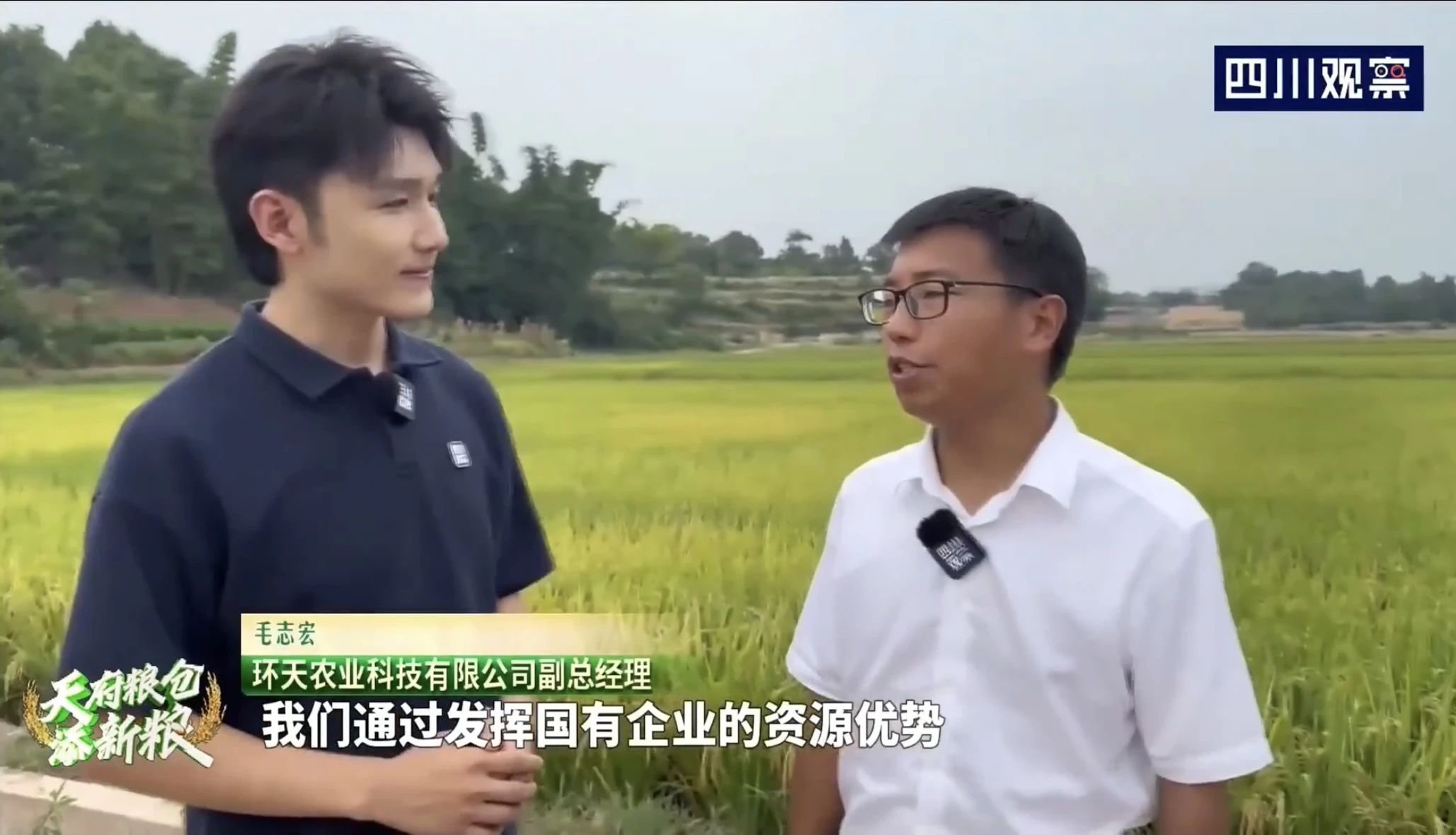
Mao Zhihong, deputy general manager of a local agricultural science and technology company: Hello. By making use of the resource strengths of a state-owned enterprise, we have, first, actively consolidated land and carried out high-standard farmland construction, thoroughly addressing the infrastructure difficulties of grain production in hilly areas; second, attracted large growers and adopted a co-building model with them, addressing the difficulty of grain planting caused by the ageing of the agricultural population; and third, used our own machinery and equipment to provide full socialised services for tillage, planting, plant protection and harvest, lowering growers’ costs and putting mechanisation to better use in grain production in the hills.
Sichuan Television reporter Han Shuo: Next, places across Meishan Tianfu New Area will enter the harvest season. The new area will also continue to advance the building of the Tianfu Granary, raise digital control and service capabilities across the board, and help build a higher-level Tianfu Granary.
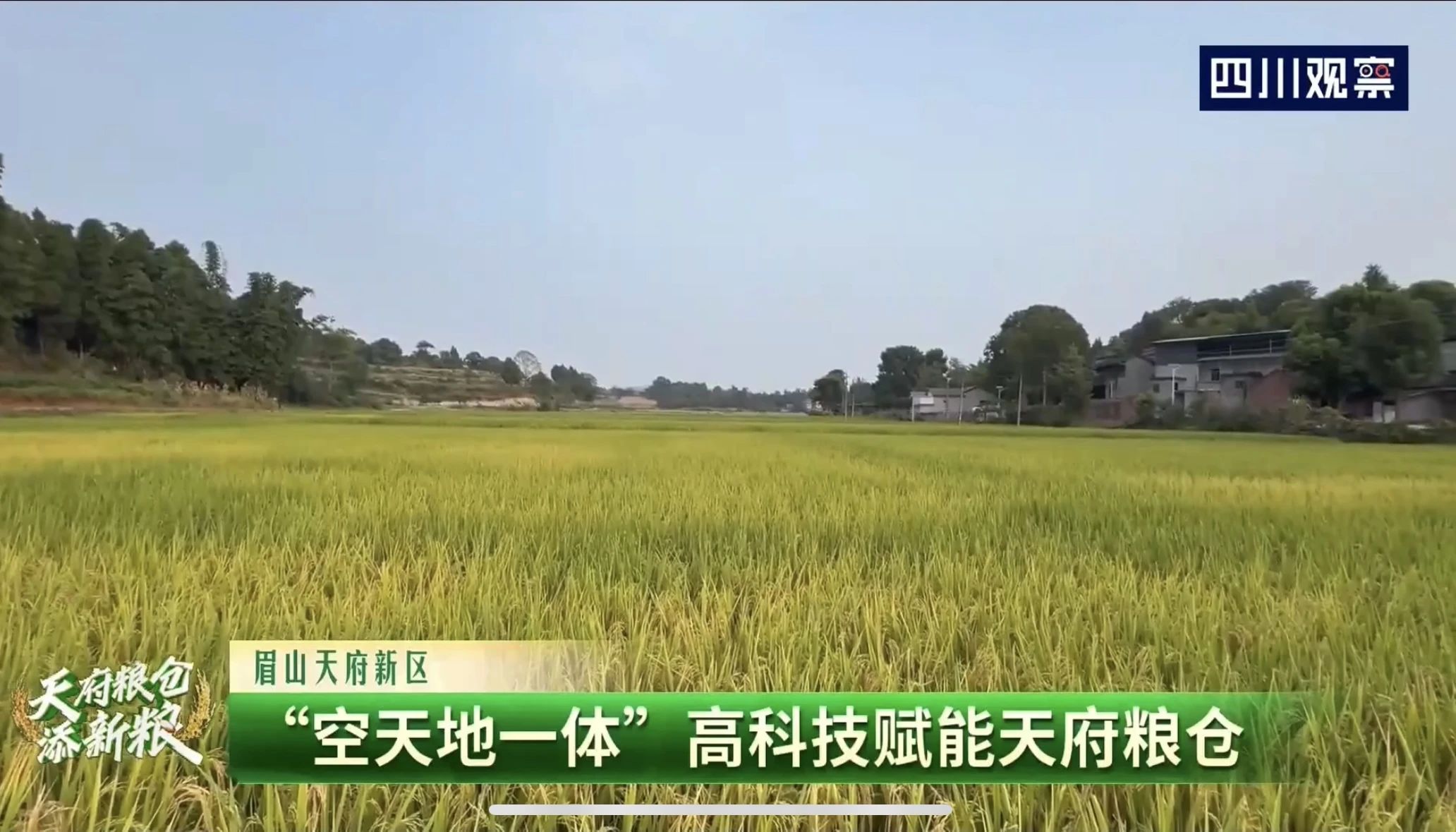
Using the power of science and technology to promote agricultural development
Using smart means to help build the granary